
Moissanite vs Lab-Grown Diamond
Compare sparkle, durability, price and the key differences before you buy.
What is the main difference?
Moissanite and lab-grown diamond can both give you a bright, durable engagement ring without the price of many natural diamonds. But they are not the same gemstone.
A lab-grown diamond is diamond. It has the same basic chemical composition and crystal structure as mined diamond. Moissanite is silicon carbide and has different optical properties.
The better choice depends on what matters more to you: owning a diamond, getting more visible size for your budget or choosing the stronger rainbow sparkle of moissanite.
Moissanite vs lab-grown diamond at a glance
| Feature | Moissanite | Lab-Grown Diamond |
|---|---|---|
| Material | Silicon carbide | Carbon |
| Is it diamond? | No | Yes |
| Sparkle | Strong brilliance with more colorful fire | Traditional diamond light performance |
| Hardness | Very high | 10 on Mohs scale |
| Price | Usually lower | Usually higher than comparable moissanite |
| Large sizes | More affordable | Price rises with size and quality |
| Everyday wear | Well suited | Well suited |
Which looks more like a natural diamond?
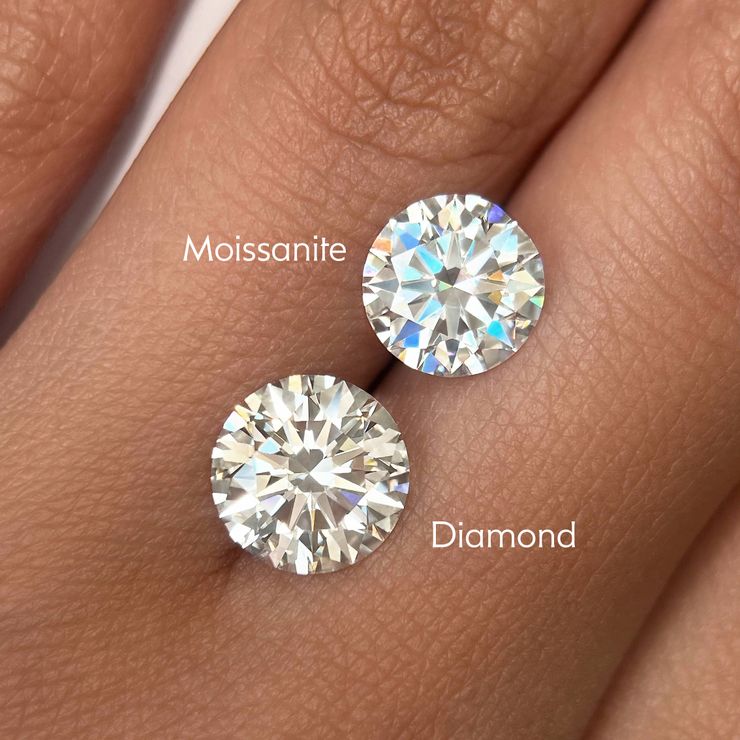
Lab-grown diamond does, because it is diamond. If your goal is the optical behavior and material properties of diamond without buying a mined stone, lab-grown diamond is the closer match.
Moissanite can look diamond-like, but its stronger fire can be easier to notice in larger stones and direct lighting.
Which one sparkles more?
Moissanite is known for strong brilliance and colorful flashes. A diamond produces a different balance of white light and fire. Some people love the lively rainbow effect of moissanite. Others specifically want the look of diamond.
For the broader comparison, see our moissanite vs diamond guide.
Which is more durable?
Diamond is the harder material and sits at 10 on the Mohs hardness scale. Moissanite is also very hard and is widely used for rings worn every day.
For more on long-term wear, see how long moissanite lasts.
Which costs less?
Moissanite generally costs less than a lab-grown diamond of similar visible size. That price gap can become more noticeable as the center stone gets larger.
Compare visible size, not only carat labels
Because the materials have different densities, compare physical dimensions. Our moissanite size chart explains why millimeters matter.
Which is better for an engagement ring?
Both can work very well. Choose lab-grown diamond if owning an actual diamond matters to you or you prefer traditional diamond optics.
Choose moissanite if you like its stronger fire, want more visible stone size for your money or simply prefer moissanite as a gemstone.
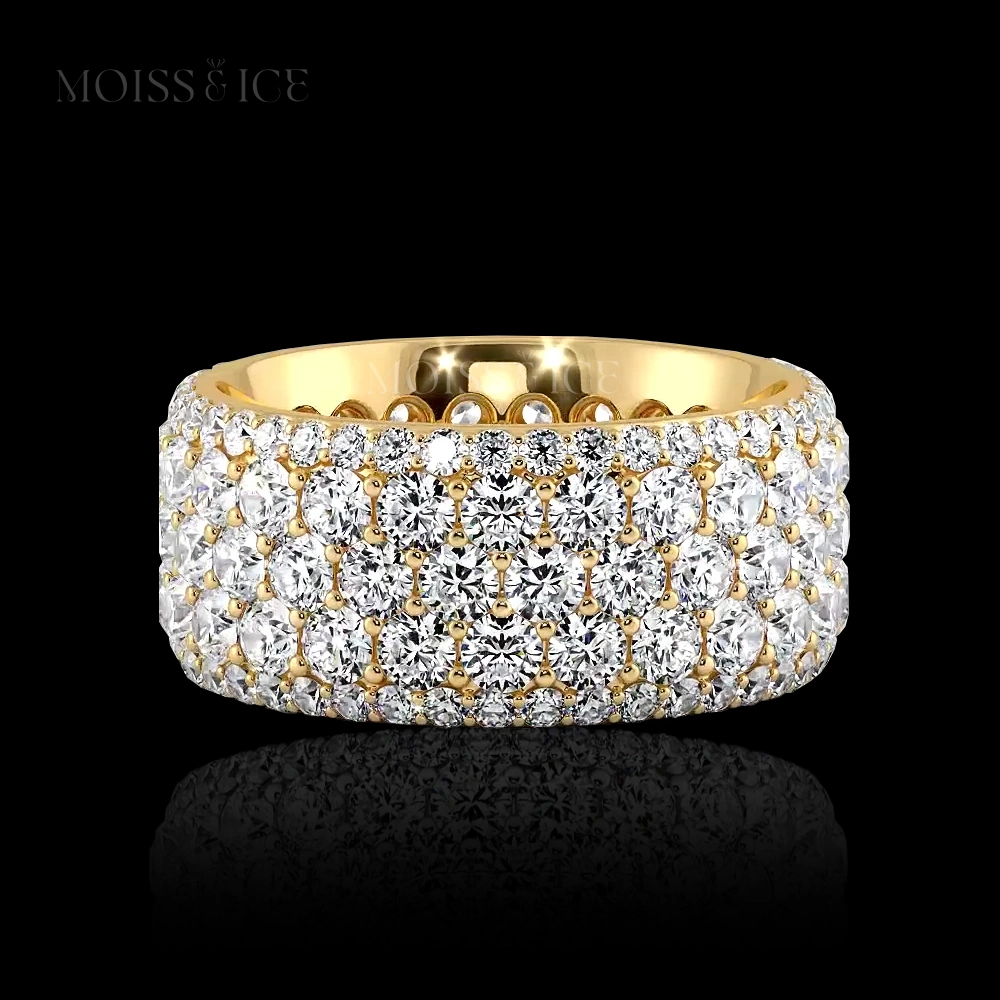
See how moissanite works across different settings in the MOISS & ICE moissanite ring collection.
What about certification?
Lab-grown diamonds can be graded by established diamond laboratories. Moissanite documentation is different and should not be treated as a diamond grading report.
Does moissanite pass a diamond tester?
It can pass many basic thermal testers because moissanite conducts heat well. Read why moissanite can pass a diamond tester.
Frequently asked questions
Is lab-grown diamond better than moissanite?
Not automatically. Lab-grown diamond is the better fit if you specifically want a diamond. Moissanite may be the better fit if price, larger visual size and stronger colorful fire matter more.
Can people tell moissanite from lab diamond?
Sometimes. Moissanite can show stronger rainbow flashes. Proper gemological testing can also distinguish the materials.
Is moissanite cheaper than lab diamond?
Generally, yes, particularly when comparing larger stones with similar visible dimensions.
Which is better for everyday wear?
Both are suitable for everyday rings when properly set.
The bottom line
If you want a diamond, choose a diamond. If you care more about a bright, durable gemstone and want greater size flexibility for your budget, moissanite makes a strong case.